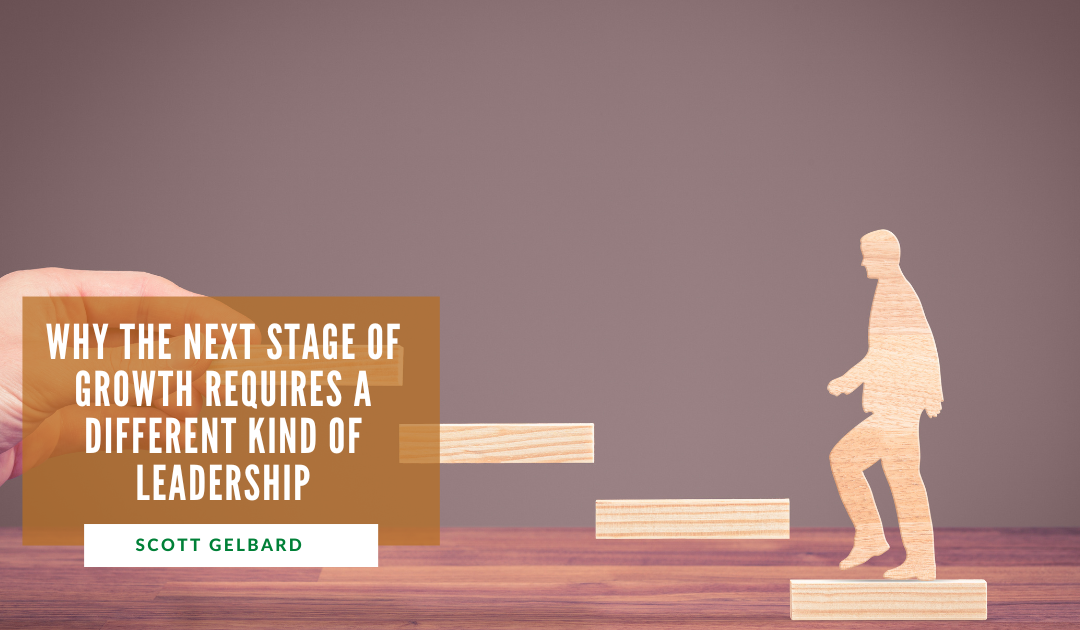
Growth is often treated as a reward for doing things well. A company finds product-market fit, attracts customers, builds a strong team, and increases revenue. But what works at one stage of growth can become a limitation at the next.
This is one of the most overlooked challenges facing growing businesses.
The leadership style that helped build a company from the ground up may not be the same style required to lead it through its next chapter. As organizations become larger and more complex, leaders must change not only what they do, but how they think.
The Founder Mindset Has a Limit
In the early stages of a company, speed and personal involvement can be enormous advantages.
Founders often make decisions quickly, speak directly with customers, solve problems themselves, and stay close to almost every important part of the business. This level of involvement can help a young company survive when resources are limited and uncertainty is high.
But eventually, the same habits can become restrictive.
When every important decision still requires one person, growth slows. When employees wait for approval before acting, accountability weakens. When the leader remains involved in every operational detail, the organization struggles to develop independent decision-makers.
The next stage of growth requires leaders to move from being the engine of the business to building an organization that can run effectively without constant intervention.
From Answers to Better Questions
As companies grow, leaders cannot possibly have all the answers.
Markets become more complicated. Teams specialize. Customers become more demanding. New competitors appear. Decisions increasingly require knowledge that may exist somewhere else within the organization.
The strongest leaders respond by becoming better at asking questions.
Instead of immediately providing solutions, they ask: What are we missing? What evidence supports this assumption? What would make this strategy fail? What does the customer actually need? Who is closest to the problem?
This creates a culture where people are expected to think, not simply follow instructions.
Leadership becomes less about having the smartest answer in the room and more about creating an environment where the organization can consistently find good answers.
Delegation Becomes a Strategic Skill
Delegation is often misunderstood as simply giving work to other people.
At scale, effective delegation is much more important than that. It means transferring ownership while maintaining clarity around outcomes.
A growing company needs leaders who can say, “You own this,” and genuinely allow the responsible person to make decisions.
That requires trust, clear expectations, measurable outcomes, and a willingness to accept that someone else may solve a problem differently.
Leaders who cannot let go often become bottlenecks without realizing it. They may believe their involvement protects quality, when in reality it prevents the organization from developing stronger leadership beneath them.
Culture Must Become More Intentional
In a small company, culture can develop naturally through daily interactions. Everyone knows how decisions are made because they see leadership making those decisions.
As the company expands, that changes.
New employees may never meet the founder. Teams may work across different locations. Departments develop their own priorities. Informal communication becomes less reliable.
This is when leadership must become intentional about culture.
Values need to be demonstrated through hiring, promotions, communication, incentives, and difficult decisions. Employees should understand not only what the company wants to achieve, but how it expects people to behave while achieving it.
A strong culture allows a larger organization to make decisions consistently without requiring constant executive supervision.
The Leader’s Role Starts Moving Upward
Another major shift occurs when leaders stop spending most of their time solving today’s problems and begin preparing the company for tomorrow’s opportunities.
This means thinking about capabilities, succession, technology, talent, market changes, partnerships, and risks before they become urgent.
The question changes from “How do we fix this?” to “Why does this keep happening, and what should we change so it does not happen again?”
That shift is critical.
Operational firefighting may feel productive because the results are immediate. Strategic leadership often produces benefits much later. Yet the ability to spend more time thinking ahead is one of the clearest signs that leadership has matured alongside the organization.
Growth Demands Personal Change
The difficult truth is that companies rarely outgrow their leaders without requiring those leaders to change.
A business entering a new stage may need more structure, stronger managers, clearer accountability, better systems, and more disciplined decision-making. None of these changes work if leadership continues operating exactly as it did when the company was smaller.
The next stage of growth is therefore not simply a test of the business model.
It is a test of leadership adaptability.
The leaders who succeed are not necessarily those who control the most, work the longest hours, or make every major decision themselves. They are the ones who recognize when yesterday’s strengths are becoming tomorrow’s constraints.
Real leadership growth happens when the leader’s goal changes from building a successful business personally to building an organization capable of creating success repeatedly.
That is the transition that turns growth from a temporary achievement into a sustainable advantage.